Waimea and the paniolo
On the green plateau between two mountains, Hawaiian cowboys have worked cattle for nearly two centuries, and the weather can change from mist to sun in a single street.
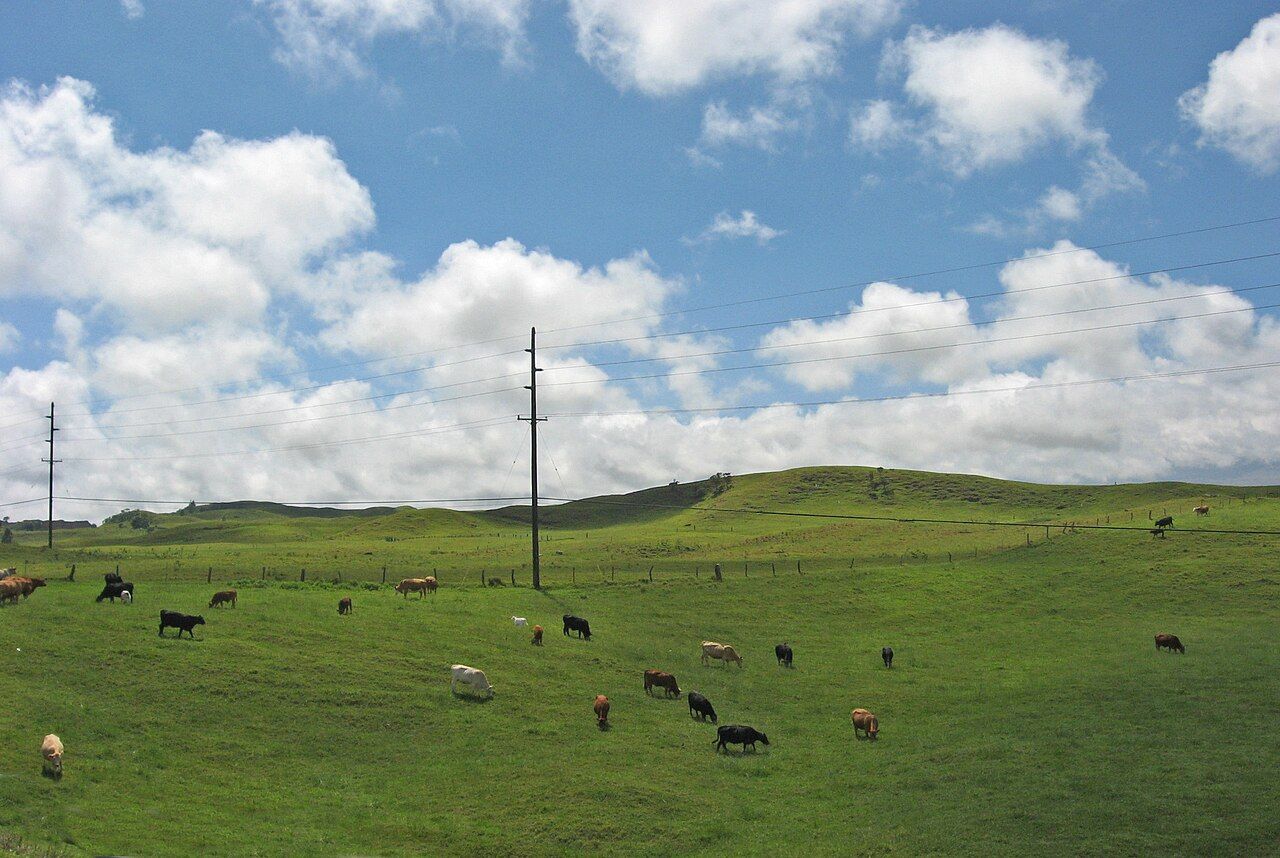
Drive west from Honokaʻa and the road climbs out of the old cane country onto a high, rolling plateau of green grass and stone walls. Cattle graze on the slopes, the air turns cool, and on most days a fine mist drifts across the road from the north while the sun shines a few miles to the south. This is Waimea, the ranching heart of Hawaiʻi Island, sitting at roughly 800 metres between the old Kohala mountains and the long slope of Mauna Kea.
The town is also known as Kamuela, the Hawaiian form of Samuel, a name that came from the post office and a member of the ranching family that shaped the area. Both names are in common use. What makes the place distinct is not its shops but its history: the paniolo, the Hawaiian cowboys who were riding and roping here long before the American West became famous for it.
How cattle came to the island
Cattle arrived in Hawaiʻi in 1793, when the British captain George Vancouver gave a small herd to Kamehameha I. The king placed a kapu on them, forbidding anyone to kill them, and the animals multiplied freely across the uplands. Within a few decades wild cattle had become a menace, trampling gardens and forests.
A young sailor from Massachusetts named John Palmer Parker had arrived in the islands around 1809 and found favour with Kamehameha. He was given the task of controlling the wild herds, and he married Kipikane, a woman of chiefly rank. Over the following decades the Parker family built up one of the largest cattle ranches in the United States on land around Waimea. The ranch remains a major presence on the plateau, and much of the open grassland you see belongs to it or to other ranches.
The paniolo were riding and roping here long before the American West became famous for it.
The paniolo were riding and roping here long before the American West became famous for it. In the early 1830s, Kamehameha III brought vaqueros from Spanish-speaking California to teach Hawaiians how to handle the cattle. The word paniolo is generally taken to come from español, the language of those teachers. Hawaiians took to the work, and a distinct ranching culture grew up, mixing Mexican saddles and roping with Hawaiian music, chant and lei.
The paniolo tradition
The best-known story is that of Ikua Purdy, a paniolo from Waimea who travelled to the Cheyenne Frontier Days rodeo in Wyoming in 1908 and won the steer roping. His win surprised the mainland crowd and became a point of pride across the islands.
Paniolo culture lives on in more than rodeo. The slack-key guitar style is often linked with the ranches, where cowboys played in the evenings. Lei made from flowers and greenery decorate hats. Rodeos are still held on the island, and ranch families keep traditions of horsemanship that go back generations.
Also on this coastValley of the Kings: the story of WaipiʻoThe town itself shows the layers of its history in small ways. Imiola Church, built of wood in the mid nineteenth century, stands on the old road east of the centre. Older buildings sit alongside newer ones that serve a growing town. Much of the land is still open, and the ranch scenery begins at the edge of the main street.
Rain, mist and rainbows
Waimea sits on a weather line. The eastern side of town catches the trade winds coming over the saddle from the windward coast, bringing mist and drizzle. The western side, closer to the dry Kohala coast, is often sunny. Locals talk of wet side and dry side within the town itself, and driving a few minutes can change the forecast completely.
The cold, wind-driven rain of Waimea has a name: Kīpuʻupuʻu. It is celebrated in chant and was also the name of a band of warriors from the area who served Kamehameha. The fine mist that often hangs in the air is called ʻuhiwai. When sun and mist meet, rainbows appear over the pastures with remarkable frequency, and late afternoon is often the best time to see them.
The weather also explains the landscape. The wetter eastern pastures stay green for much of the year, while the land falling away to the west turns gold and brown in dry spells. Ranchers have long moved cattle between the two with the seasons, following the grass. Fire is a real risk on the dry side in late summer, and smoke from a brush fire on the leeward slopes is not unusual.
Bring a warm layer. Evenings can be surprisingly cool for Hawaiʻi, and the wind on the plateau makes it feel colder than the thermometer says.
Visiting ranch country
- The pastures are private. Stone walls and fences mark working land; do not climb them or walk into fields for photos.
- Cattle and horses sometimes cross or stand near roads. Slow down, especially in mist.
- Roads like the Kohala Mountain Road north of town run through ranch land with wide views; use pull-outs rather than stopping on the road.
- Small farms around Waimea grow vegetables for the island. Some sell produce at markets in town on certain days.
Mauna Kea rises to the south-east of town, often with snow on its summit in winter. From Waimea a road leads to the Saddle Road and on to the mountain; read the guide to the mountain before going higher, as altitude and rules matter.
Waimea as part of a trip
Waimea is a natural pivot between the Hāmākua side and the Kohala coast. From here, one road goes north over the mountain to the old plantation towns of North Kohala and on to Pōlōlū Valley, the far end of the cliffs that begin at Waipiʻo. Another drops west to the dry coast and the beaches. The road east takes you back through Honokaʻa to the Waipiʻo lookout.
Waimea also has a long life before cattle. The plateau was farmed by Hawaiians for centuries, with field systems on the slopes and trails linking the windward valleys to the Kohala coast. Kamehameha drew warriors and supplies from this district, and the old routes between Waipiʻo and the leeward shore crossed nearby. The pastures you see today sit on top of that older story, and stone walls and house sites from earlier times still survive in places on private land.
Because of its height, Waimea is often green when the coast is brown, and cool when the coast is hot. It is a good place to slow down for an afternoon, watch the weather change across the grass, and think about the paniolo who rode these slopes when the islands were still a kingdom.
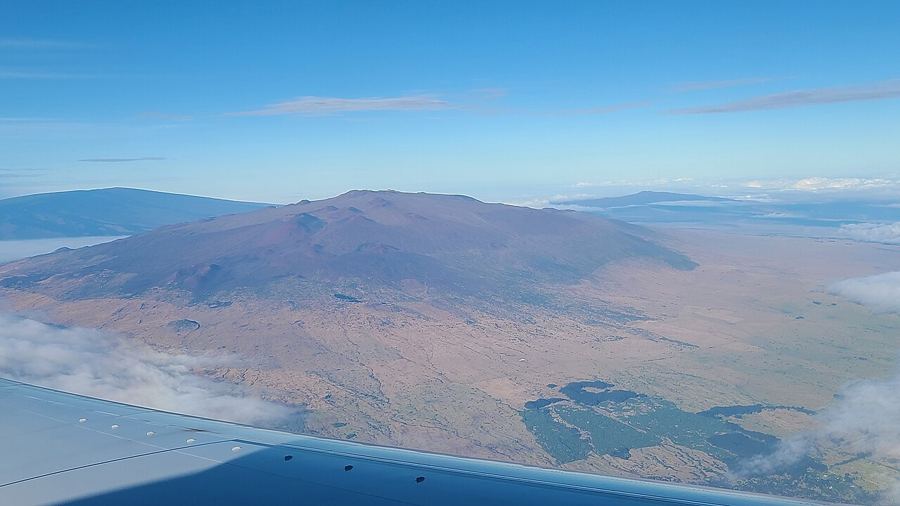 Mauna Kea, sacred mountain and sky
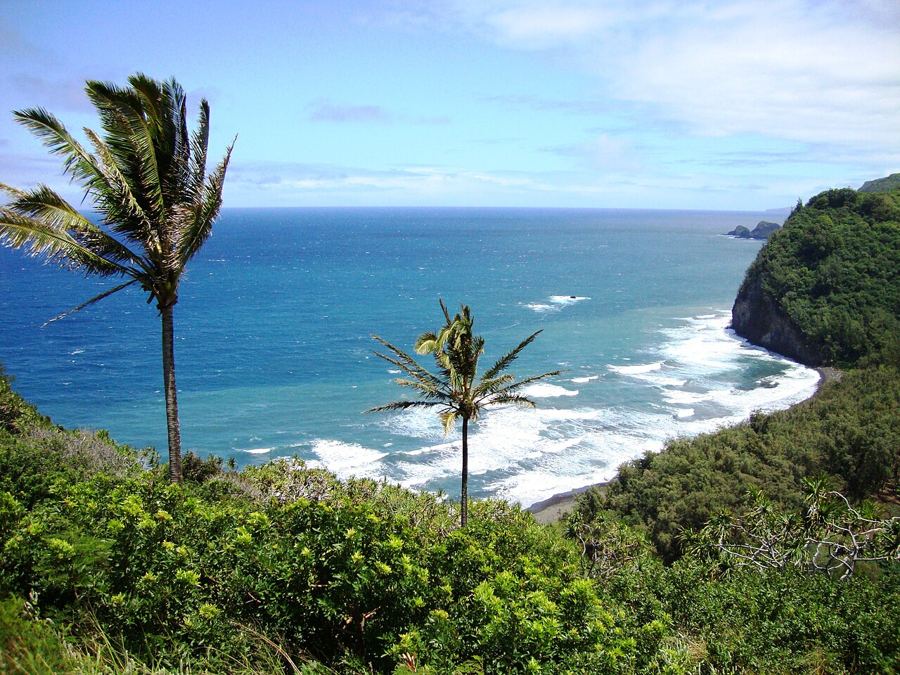 Pōlōlū Valley at the other end
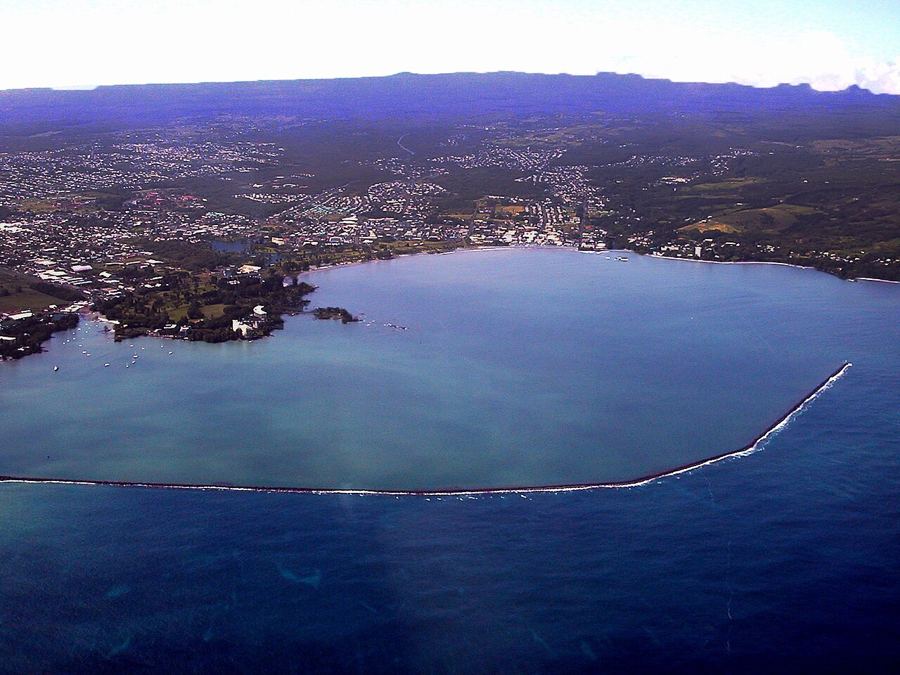 Hilo, the rainy capital