Rainbow Falls and the Wailuku River
Just above downtown Hilo, the island's longest river drops over a ledge of old lava into a wide pool, and on sunny mornings its spray throws rainbows across the gorge.
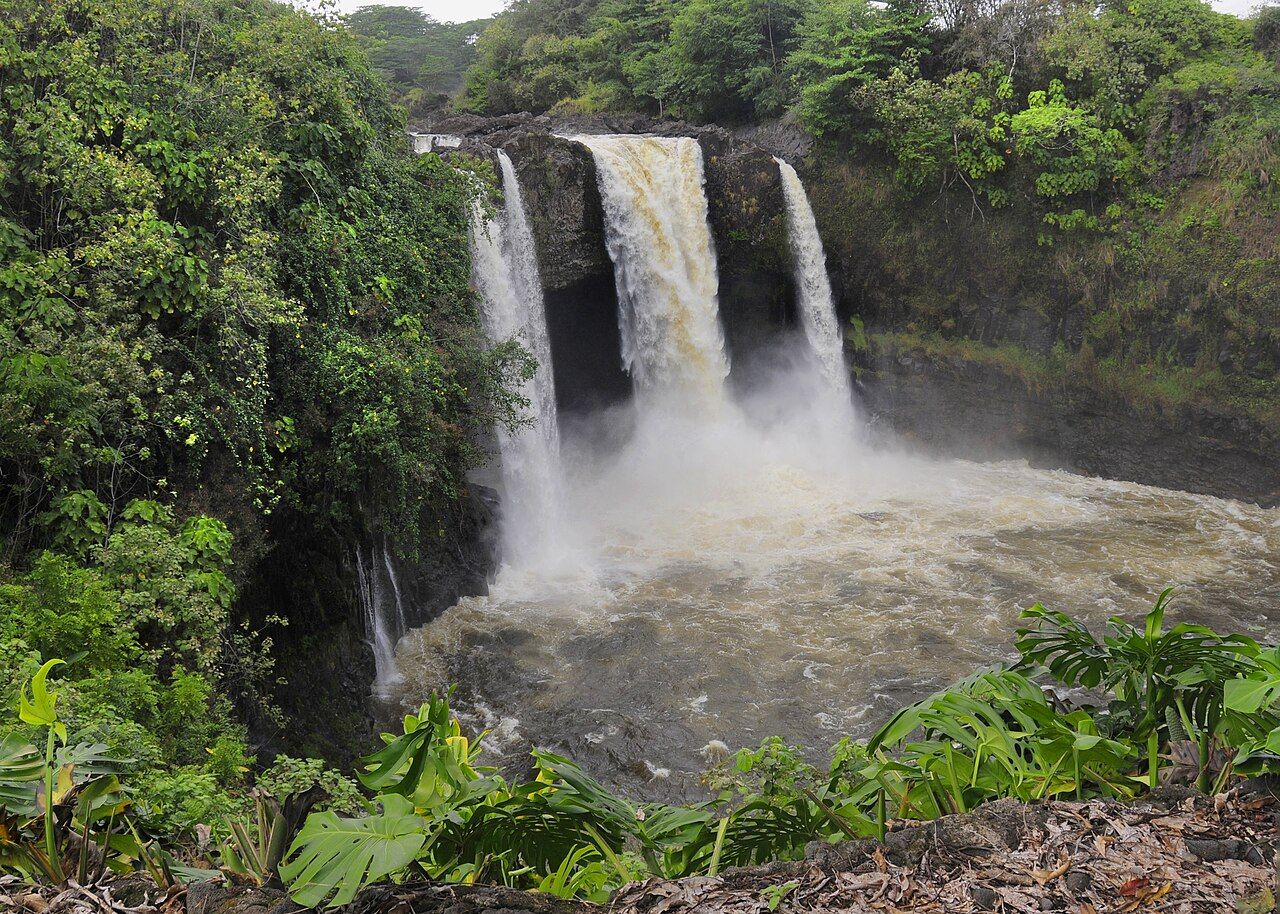
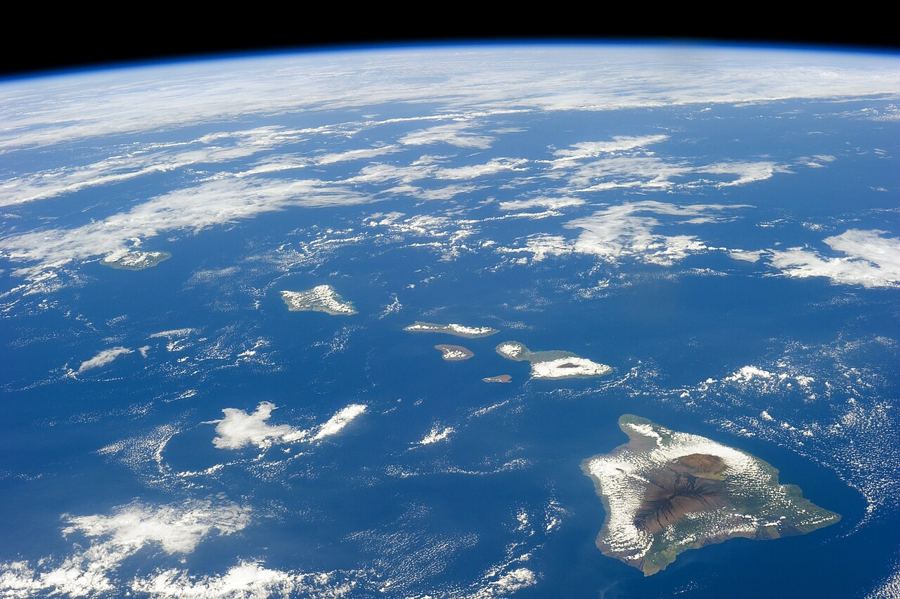
The Wailuku River begins high on the slopes of Mauna Kea and runs down to Hilo Bay, the longest river in the Hawaiian Islands. In its last few miles it cuts through layers of old lava, and just above downtown Hilo it pours over a ledge into a broad pool. This is Rainbow Falls, known in Hawaiian as Waiānuenue, rainbow-seeing water. A few minutes upstream lie the pools called Boiling Pots. Both are part of Wailuku River State Park, and both are easy to see in a short visit.
Rainbow Falls
Rainbow Falls drops around 24 metres over a lava ledge into a wide, deep pool. The viewing area is a short walk from the parking lot, with a railing that looks straight across the gorge at the falls. The height is modest compared with the drops along the Hāmākua Coast, but the volume can be impressive, especially after heavy rain, when the river turns brown and the falls spread across the whole ledge.
On a sunny morning, the low sun from the east shines through the spray, and rainbows appear over the pool. They are most likely mid-morning on clear days after rain, when there is plenty of mist. That timing gives the falls their name.
Stand with the sun behind you and look toward the spray; the rainbow moves as you move, and from some spots along the railing it seems to arch right across the pool. On grey or wet mornings there may be no rainbow at all, but the falls are often fuller, louder and just as worth the stop.
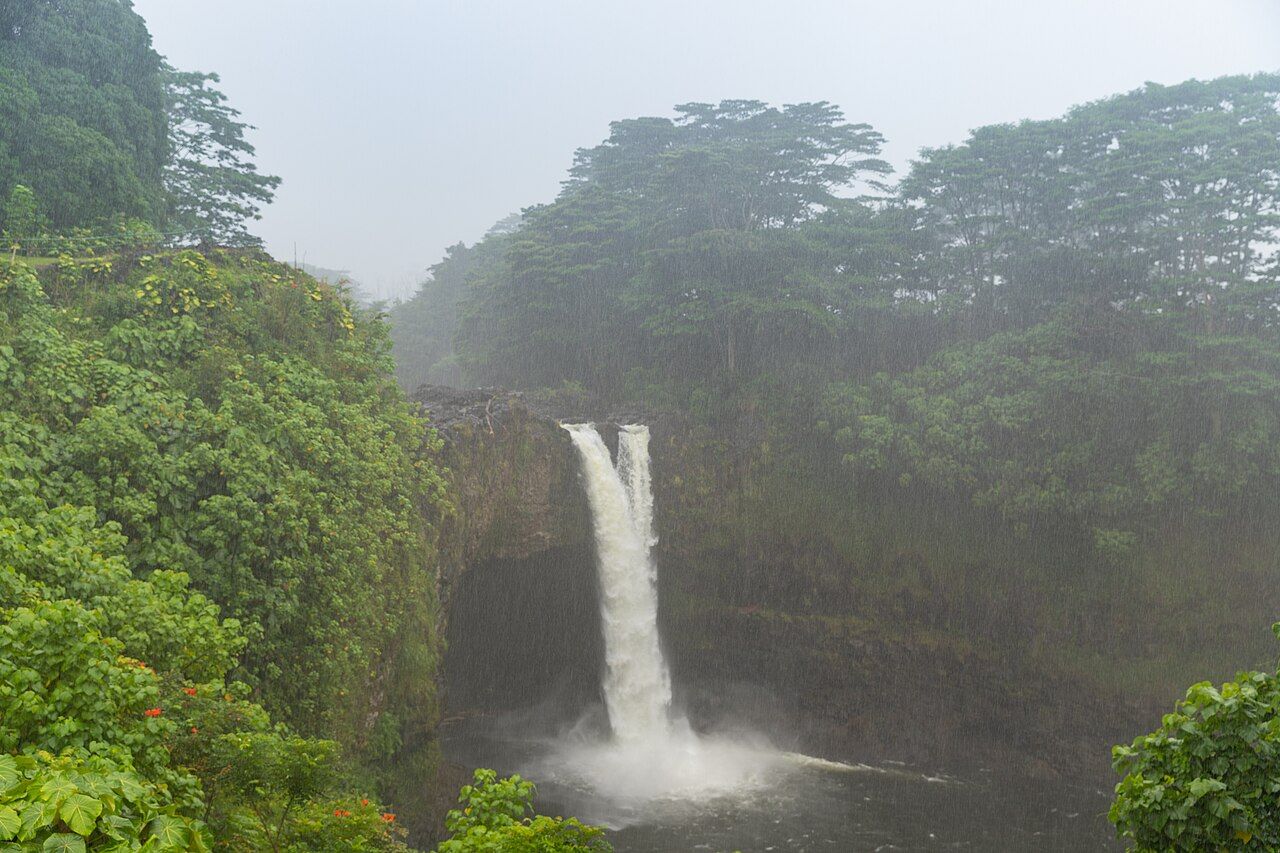
Behind the falls lies a cave. In Hawaiian tradition it was the home of Hina, a goddess and mother of the demigod Māui. Stories tell of Māui coming to her aid when a rival tried to drown her by blocking the river. Many places along the Wailuku carry similar stories.
Above the falls
A short set of steps on the left leads up from the main viewpoint to a higher area, where a large banyan tree grows and the river can be seen above the falls. The steps are often wet and slippery. Stay on the path; people have fallen trying to reach the edge for a closer view.
The ground around the pool is uneven lava, and the plants at the edges hide sharp drops. There is no safe way down to the water, and any attempt to get there is both dangerous and against park rules.
Boiling Pots
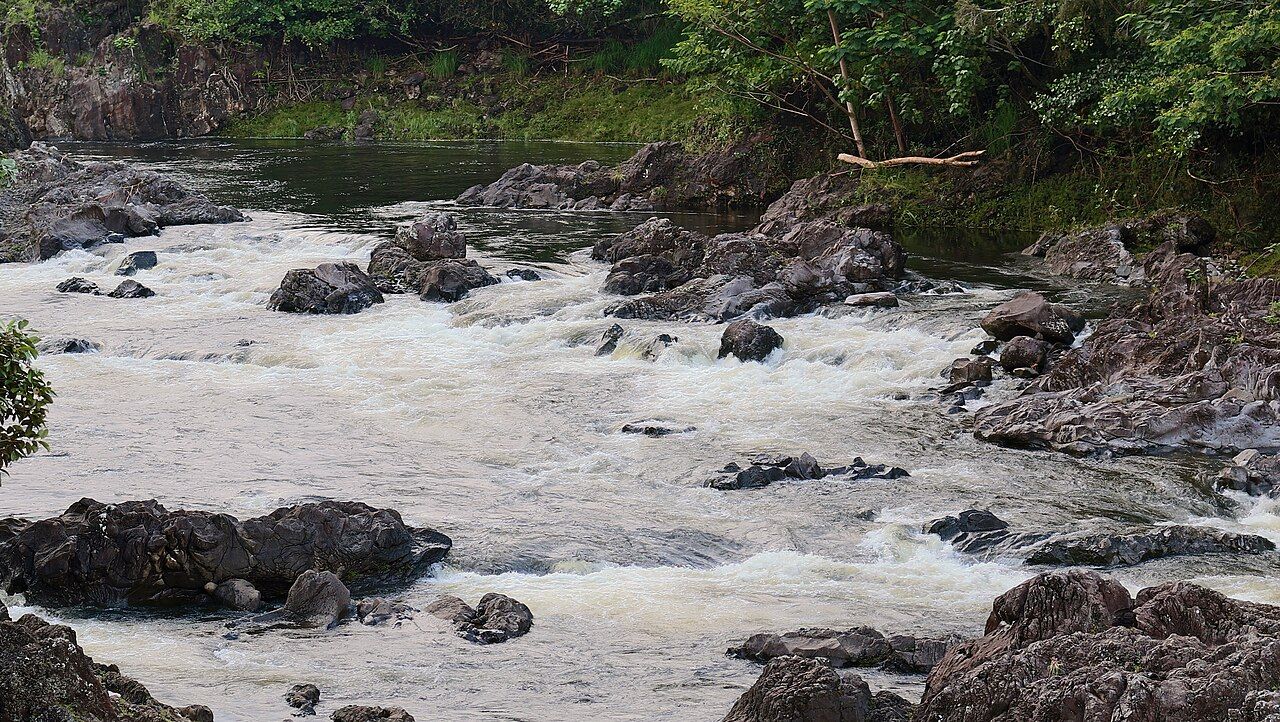
About two kilometres further upstream, a second section of the park looks down on a series of round pools linked by cascades. When the river runs high, the water churns and seems to boil as it moves from one pool to the next, which gave the place its English name. In Hawaiian the falls here are called Peʻepeʻe.
Also on this coastHiʻilawe and the falls at the back of the valleyThe pools were formed as lava flowed down the valley and cooled in different ways, leaving bowl-shaped hollows in the riverbed. From the overlook you can see the whole sequence of pools, and the cascade where the river drops into the first.
Why the river is dangerous
The Wailuku looks calm on many days, and the pools can look inviting. They are not. The river drains a large area of the mountain, and rain far upstream, sometimes when the sky over Hilo is clear, can send a wall of water down the channel in minutes. The pools at Boiling Pots have strong underwater currents, and their shapes trap swimmers.
- Do not swim, wade or climb in the river at either site.
- Keep to the railings and the marked paths, however tempting the edge looks.
- Obey closures and signs, which change with conditions.
- Keep children close; the edges are steep.
People have drowned at both Rainbow Falls and Boiling Pots, including strong swimmers and people who knew the river. Viewing from above is the safe and the respectful way to enjoy it.
The river also matters to the people who live along it. It feeds the town, carries stories in every pool and bend, and has been a place of gathering for generations. Treating it with care, and not as a playground, is part of respecting Hilo.
Into Hilo
Both sites are reached from downtown Hilo by a road that climbs inland through residential neighbourhoods. Rainbow Falls is first, a few minutes from the bay, and Boiling Pots is a little further up a side road. Both have small parking areas. Please drive slowly; people live along these streets.
A morning visit has two benefits: the best chance of rainbows and the fewest people. After heavy overnight rain, the falls are at their most powerful. During long dry spells, the river can drop to a trickle, and the falls look quite different.
A morning in Hilo
Rainbow Falls fits easily into a day in Hilo. Start at the falls in the morning, then visit the bayfront and the gardens, and spend a wet afternoon in a museum. If you are travelling from the Hāmākua side, it also makes a fine pairing with ʻAkaka Falls State Park, which lies on the way north and shows a very different kind of waterfall: a long, thin plunge into a forested gorge rather than a wide drop into an open pool.
For more on the falls of the coast and the care they need, see the guide to weather and flash floods before you go out on a rainy day.
 Hawaiian words and a respectful visit
 Poke, laulau and the food of the coast
 Weather, roads and getting around the island